


Anjany began his career as a software engineer and went on to earn a PhD in computer science, with one clear goal: teaching machines to understand medical images. Today he works at the interface of technology and medicine, making sure our developers and doctors speak the same language.
OUR STORY
Bonescreen offers a novel, AI-based technology for non-invasive extraction of biomarkers from existing medical images to assist radiologists and clinicians in evaluating bone health.
products
SpineQ® assists
clinicians*
SpineQ® assists clinicians in diagnosing osteoporosis from almost any existing routine CT containing the spine. SpineQ® provides a comprehensive spine report, including a level-wise annotation, a calibrated, reproducible bone mineral density measurement and osteoporotic fracture identification. It is designed to improve report quality by highlighting abnormal findings relevant for osteoporosis that are frequently overlooked.
Products
SpineQ® assists clinicians*
SpineQ® assists clinicians in diagnosing osteoporosis from almost any existing routine CT containing the spine. SpineQ® provides a comprehensive spine report, including a level-wise annotation, a calibrated, reproducible bone mineral density measurement and osteoporotic fracture identification. It is designed to improve report quality by highlighting abnormal findings relevant for osteoporosis that are frequently overlooked.
SpineR facilitates your spine processing*
SpineR is easily integrated in many environments as the backbone of spine processing. In CT scans, SpineR segments and labels all vertebrae, identifies subregions and special points of interest, as commonly needed in automated surgery planning, PACS overlays, finite element modelling, 3D printing and more. SpineR outperforms current state-of-the-art methods for spine segmentation in a computationally efficient way without the need for a GPU. SpineR readily identifies transitional vertebrae and all enumeration anomalies.
users
SpineQ® fits your needs
Optimised for your working environment

Research
Enabling bone researchers with advanced tools for precise segmentation and landmark detection, accelerating their research efforts.

PACS
Seamlessly integrating context information and anatomical guidance, enhancing the efficiency and completeness of patient records.

Spine Surgery
Intraoperative provision of level-specific quantitative information on bone quality to surgeons in real time.

Clinicians
Providing clinicians with a quick, at-a-glance way to identify patients
at risk, enhancing patient care and decision-making.

Radiologists
Empowering radiologists with precise, quantitative insights into bone diseases, such as osteoporosis, for more informed diagnoses.
Radiologists

Empowering radiologists with precise, quantitative insights into bone diseases, such as osteoporosis, for more informed diagnoses.
PACS
Seamlessly integrating context information and anatomical guidance, enhancing the efficiency and completeness of patient records.
Research
Enabling bone researchers with advanced tools for precise segmentation and landmark detection, accelerating their research efforts.
Clinicians
Providing clinicians with a quick, at-a-glance way to identify patients at risk, enhancing patient care and decision-making.
Spine Surgery
Intraoperative provision of level-specific quantitative information on bone quality to surgeons in real time.
scientific studies
SpineQ® is backed by peer-reviewed research
SpineQ®’s initial inkling dates back more than seven years. Born out of two ERC grants and resulting in numerous scientific publications, Bonescreen is founded on strong peer-reviewed research.
See all articlesOur Partners
Research collaborators







Commercial partners


Funded by




about us
Bonescreen was founded in 2022 and is headquartered in Munich.
Bonescreen consists of a team rich in experience and diverse in background, be it physics, computer science, medicine, radiology, medical technology or business and finance
Collectively, we have 25 years of experience in radiology and 15 of experience in software engineering and machine learning.
Collectively, we have 25 years of experience in radiology and 15 of experience in software engineering and machine learning.


Anjany
CEO

Malek is a biomedical professional with a background in software development and deep learning for medical
imaging. Malek ensures that our product meets customer,
regulatory, and quality
requirements.
Malek
CTO

Giles is a biomedical engineer with special interest and experience in deep learning. He ensures the smooth running of Bonescreen's IT infrastructure and puts together the nuts and bolts of the products.
Giles
CPO

Sebastian is a medical doctor specialising in neuroradiology. He is passionate about continuously improving data-driven healthcare technologies to deliver outcomes that really matter to patients.
Sebastian
CMO

Dominik splits his time between funding and business development. Prior to joining as CFO, he worked for J.P. Morgan in Sweden and the UK. If you want to get him excited outside of work, ask him about his Italian wine collection.
Dominik
CFO

Jan is Professor and Director of Neuroradiology at the Technical University of Munich (TUM). As an expert in osteoporosis and computational imaging, he ensures our technology delivers real value for patient care.
Jan
Clinical Strategy Lead
Anjany began his career as a software engineer and went on to earn a PhD in computer science, with one clear goal: teaching machines to understand medical images. Today he works at the interface of technology and medicine, making sure our developers and doctors speak the same language.
Anjany
CEO

Badiaa holds a Master's degree from the Polytechnic University of Turin and has extensive experience in machine learning and data science. She focuses on building robust, reproducible algorithms and driving their deployment and monitoring in production.
Badiaa
Lead ML Engineer
Malek is a biomedical professional with a background in software development and deep learning for medical imaging. Malek ensures that our product meets customer, regulatory, and quality requirements.
Malek
CTO
Giles is a biomedical engineer with special interest and experience in deep learning. He ensures the smooth running of Bonescreen's IT infrastructure and puts together the nuts and bolts of the products.
Giles
CPO
Sebastian is a medical doctor specialising in neuroradiology. He is passionate about continuously improving data-driven healthcare technologies to deliver outcomes that really matter to patients.
Sebastian
CMO
Dominik splits his time between funding and business development. Prior to joining as CFO, he worked for J.P. Morgan in Sweden and the UK. If you want to get him excited outside of work, ask him about his Italian wine collection.
Dominik
CFO

Svenja holds a Master's degree in Molecular Biotechnology from the Technical University of Munich with a focus on cancer research. She is passionate about putting scientific findings into practice. At Bonescreen, she is mainly responsible for quality management and research.
Svenja
Regulatory Affairs
Jan is Professor and Director of Neuroradiology at the Technical University of Munich (TUM). As an expert in osteoporosis and computational imaging, he ensures our technology delivers real value for patient care.
Jan
Clinical Strategy Lead
Why do we need
biomarker extraction?
The doubling of the population older than 60 years during the next three decades will bring an explosion of bone-health-related conditions. Among these, osteoporosis represents the most common bone disease in humans.
EFFECTIVE SCREENING
Osteoporosis is a disease that can be treated effectively if diagnosed early. However, effective screening programmes are currently missing. This is what Bonescreen aims to improve with our AI-based opportunistic screening software.
Preventive healthcare remains an underserved market
On average, European countries invest around 3–4% of their total healthcare spend in preventive measures. The remaining 97% of costs go to treating diseases.
REDUCED COST
This is too low, claims the OECD. Estimates imply that healthcare costs could be reduced by 30% if more preventive action were taken. In light of the €55bn the EU spends every year on the treatment of osteoporotic fractures, this implies cost savings of €15bn.
PREVENTION
Not to mention the loss of quality of life for the more than 4 million European patients who suffer an osteoporotic fracture each year. At Bonescreen, we build prevention: a tool that gives millions of Europeans access to preventive measures.


NEWS
Featured news

Wenn das Lungenkrebs-Screening auch die Knochen schützt: Neue Studie mit Bonescreen
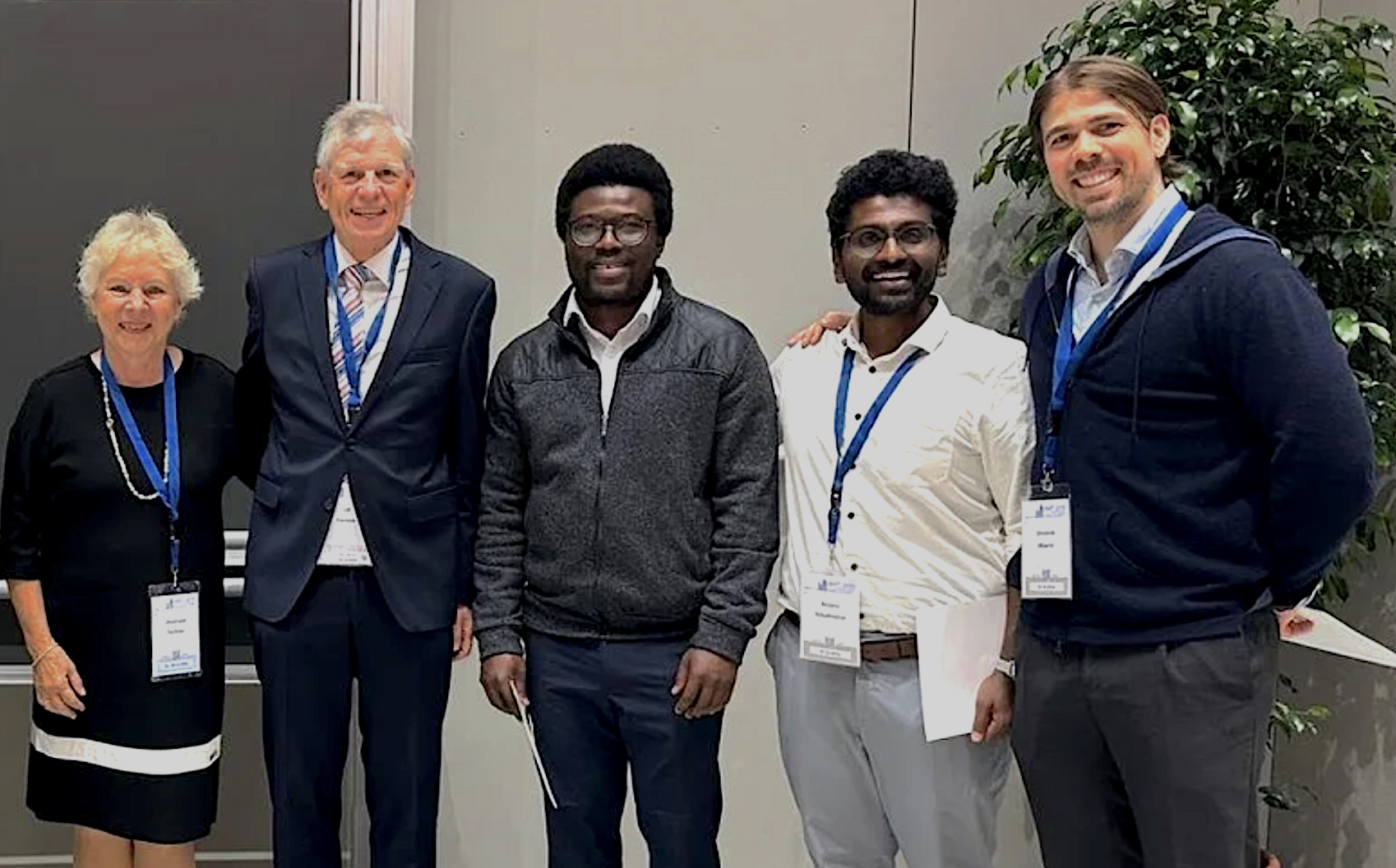
Hohes Vertrauen - Preis für Innovation in der Medizintechnik 2026 geht an Bonescreen

Osteoporose? Muss nicht sein, sagt die Unfallchirurgin Dr. Veronika Koeppen

DIE RADIOLOGIE erweitert ihr medizinisches Leistungsspektrum mit Bonescreen

Abstract Prize of the Dachverband Osteologie (DVO) 2026 – handed over by Prof. Ralf Schmidmaier

Come and meet us at RSNA

Bavaria invests in Bonescreen and the TUM University Hospital

Transforming Bone Disease Diagnosis – The Skeleton Crew Podcast

Bonescreen Joins TUM Venture Lab Healthcare

Bonescreen partners with LEM Surgical

Bonescreen featured in an interview with the German "Handelsblatt"

New Partnership with University Hospital Ulm

Bonescreen is among the winners of BayStartUP's 2024 competition

Bioengineering Day 23 - AI in medical applications

Partnership with Dr. Weaver's lab at Wake Forest University

Bonescreen wins the German Founders Award 2022 for Digital Innovations

European Research Council awards Proof-of-Concept Grant for Jan Kirschke

EIT invests 1.5M in Bonescreen

Bonescreen wins EIT wildcard competition

Bonescreen becomes resident at WERK 1 in Munich

Invitation to Berlin by Vice Chancellor Dr. Robert Habeck

